Electronics for Photonic Integrated Circuits
Micro-credential

September 2026 – December 2026
Photonic chips enable a wide range of innovative applications, ranging from telecommunications and artificial intelligence to sensing, signal processing, and quantum applications. As these chips become increasingly sophisticated, complex, and high-speed, they rely on specialized co-designed electronic functions to control, drive, and read out their photonic components effectively.
Understanding the role and operation of these electronic functions is crucial for the development of next-generation photonic systems, yet this expertise often remains limited to specialists. This micro-credential bridges that gap by providing non-specialists with the fundamental insights needed to understand the electronic functions and circuits used in photonic systems, electronic-photonic co-design principles, and high-frequency effects and interconnects. In addition, the course includes laboratory demonstrations focused on the characterization of photonic chips and optical transceivers. The entire course can be completed remotely.
High-tech companies and research institutions (in Flanders and abroad) are increasingly seeking professionals with expertise in photonic system design and photonic chips. In this microcredential, professionals, researchers, and Master's students will gain a solid foundation in the various electronics functions required for sophisticated PICs.
Micro-credentials are small courses of academic level that focus on specific competencies. They often consist of one or several subjects which are also taught in an university bachelor's or master's degree.
If you pass the micro-credential, you will receive a certificate as proof that you have completed the acquired competencies. So you also acquire real official credits that are recognized in your further career, also internationally. They can also lead to exemptions for other courses, also at other institutions and organizations.
You will receive a certificate of the micro-credential + credit certificate when you pass the corresponding exam (4 ECTS points).
Examination method: written open-book preparation and oral-closed book assessment
Prof. Johan Bauwelinck, Department of Information Technology, Ghent University-imec
Contents
The course focuses on the electronic aspects that are essential to photonics engineering. Rather than providing an advanced course in IC design, it aims to establish a solid understanding of the key electronic concepts and techniques required in photonic systems. Topics include device modelling and S-parameters, transmission lines and impedance matching, transceiver architectures, control strategies for PICs, driver and transimpedance amplifier circuits, signal and power integrity, equalisation techniques, PCB and interposer design, and test and measurement methods.
Final competences
- Understand the required functionalities and design trade-offs in optical transceiver circuits and architectures
- Understand photonic device models, high-frequency effects in electronic-photonic co-design and interfaces, signal integrity, transmission lines and matching circuits
- Analyze and characterize the performance of optical transceivers.
- Connect with specialized IC and transceiver designers
Practical info
Fee
363,80 euro
Course materials are available on the Ufora learning platform.
Click here for more information about the billing process and the payment request.
A payment request is always addressed to the student.
If your company or employer wants to pay your tuition fee they can do so by using the reference mentioned on the payment request.You can also make the payment yourself and ask for a proof of payment by sending an email to studiegeld@ugent.be.
This proof of payment can then be used as an expense report.
FYI: there is no VAT on the tuition fee. Therefore it is unnecessary to mention the name and VAT number of the company on the payment request.
Opleidingsverlof (VOV)
This training is recognized in the context of VOV (ODB-P00004). For each credit point you are entitled to 4 hours of VOV.This course (4 ECTS points) covers in total 16 hours of VOV (participation in the assignments and the exam is mandatory).
The registration certificate for VOV can be found at your personal page in OASIS (student administration platform).
You can download this yourself via OASIS. For administrative reasons, it's helpful to write the registration number ODB-P00004 on the certificate yourself. Certification of exam participation is done automatically.
Enroll here: https://studiekiezer.ugent.be/2026/micro-credential-electronics-for-photonic-integrated-circuits-en/programma
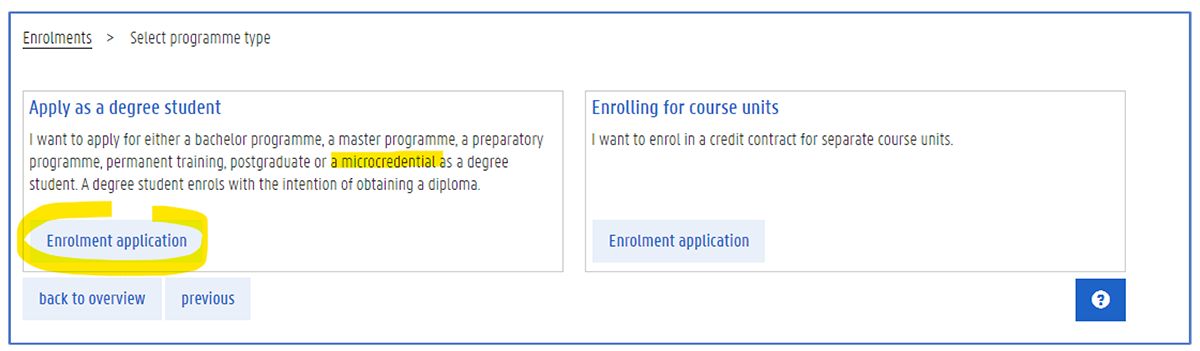
Registration deadline: 30/09/2026 A manual to enroll can be found here.Please select ‘microcredential’ when you subscribe!
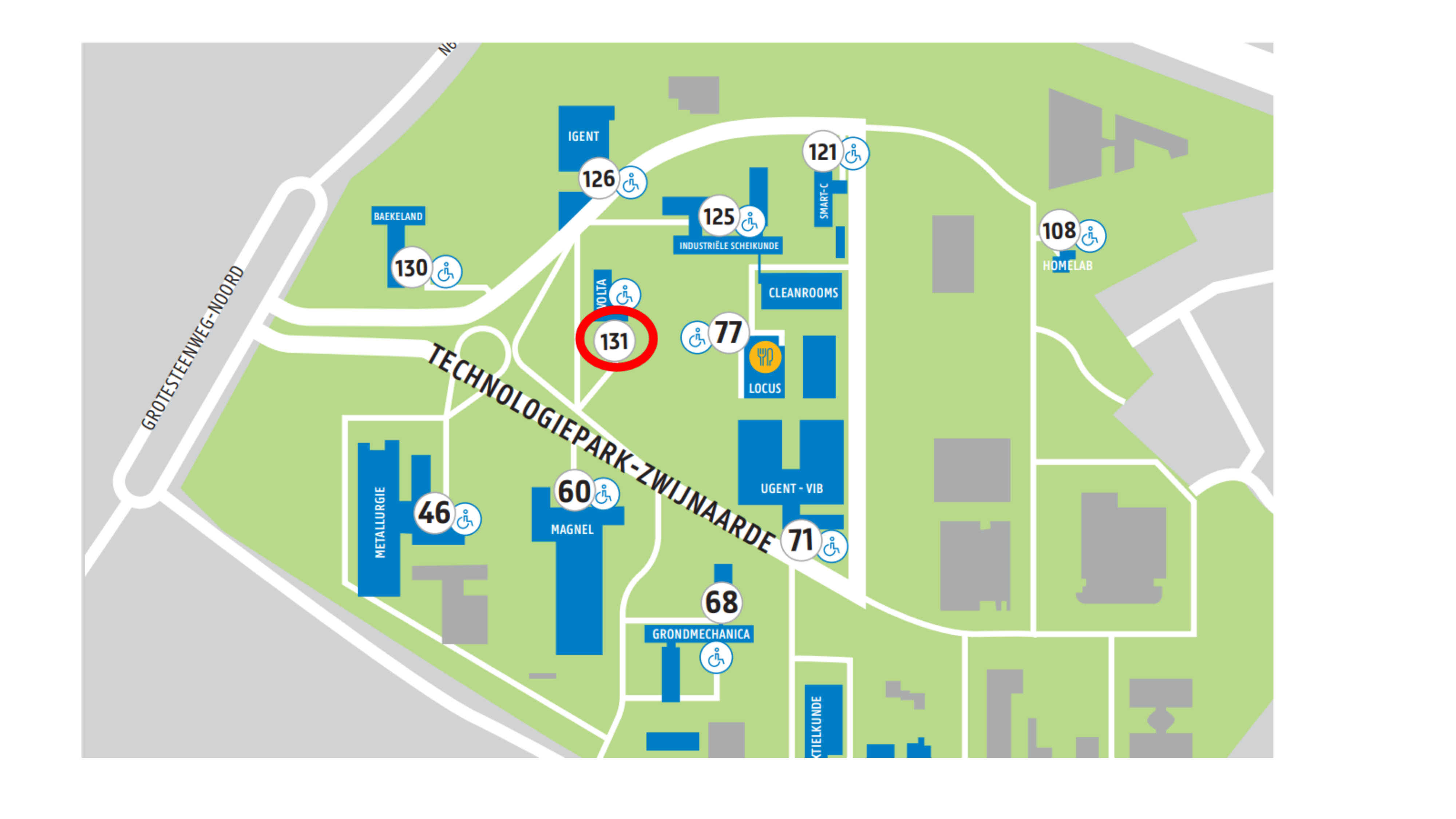
Classes start on September 29, 2026 and always take place on Tuesdays from 14:30 till 17:30 at Technologiepark Zwijnaarde, building 131, room 2.2. The last session will be given on December, 8, 2026.
The entire course can be completed remotely. The theoretical sessions can also be followed online via Teams and will be recorded. A few Q&A sessions will be planned outside of working hours (no dates fixed yet). The few lab sessions will be optional. A remote format for the exam will be made.
Note: paid parking!
Click here to download the campus map.
This program has a workload of 4 credits. Credits indicate the weight of a course unit within a degree program. One credit represents 25 to 30 hours of total study time (lectures, assignments, self-study, etc.).
Participants take the classes together with the students of the Advanced Master of Silicon Photonics.
The training is supported by the Ufora learning platform, which contains, among other things, the course material.
Laptop
A personal laptop is required.Organisation
Universiteit Gent
UGent Academie voor Ingenieurs
Technologiepark 60
9052 Zwijnaarde
Tel.: +32 9 264 55 82
ugain@UGent.be